The intersection between post-rock and modern classical, perhaps with a bit of experimental ambient thrown in for good measure, ought to be something of a natural home for me. Has been, in the past, on occasions. But as the quantity of music within whatever-that-genre-might-be-called has grown, my tolerance for it has failed to keep pace, and my patience has worn a little thin. Too much of it reaches for intimacy and intricacy and finds only a kind of polite mundanity, verging on the inane; it’s nice music made by nice people, but it has a smell of sandals about it. Too much of the rest billows blankly, a white sheet on which you’re supposed to project your own thoughts, an artistic cop-out. Too little of it risks being ridiculous in the hope of attaining the sublime, and, as a Swans fan, that feels like the bare minimum I require.
I admire Erland Cooper’s work already. As part of the Magnetic North, he has committed to taking what might easily be a rather patchwork sound and nailing it down, attaching it very firmly and deliberately to a specific place. The results on “Prospect of Skelmersdale” are quite splendid, enough to conjure up vivid images of a town to which I’ve never been, enough to make a little trip round its roads on Streetview feel like a much more profound journey. While much less grandiose, it reminds me of the first Arcade Fire album, how it told you these vivid, enchanting, entrancing stories from someone else’s life story, laced narcotically with idealism and nostalgia.
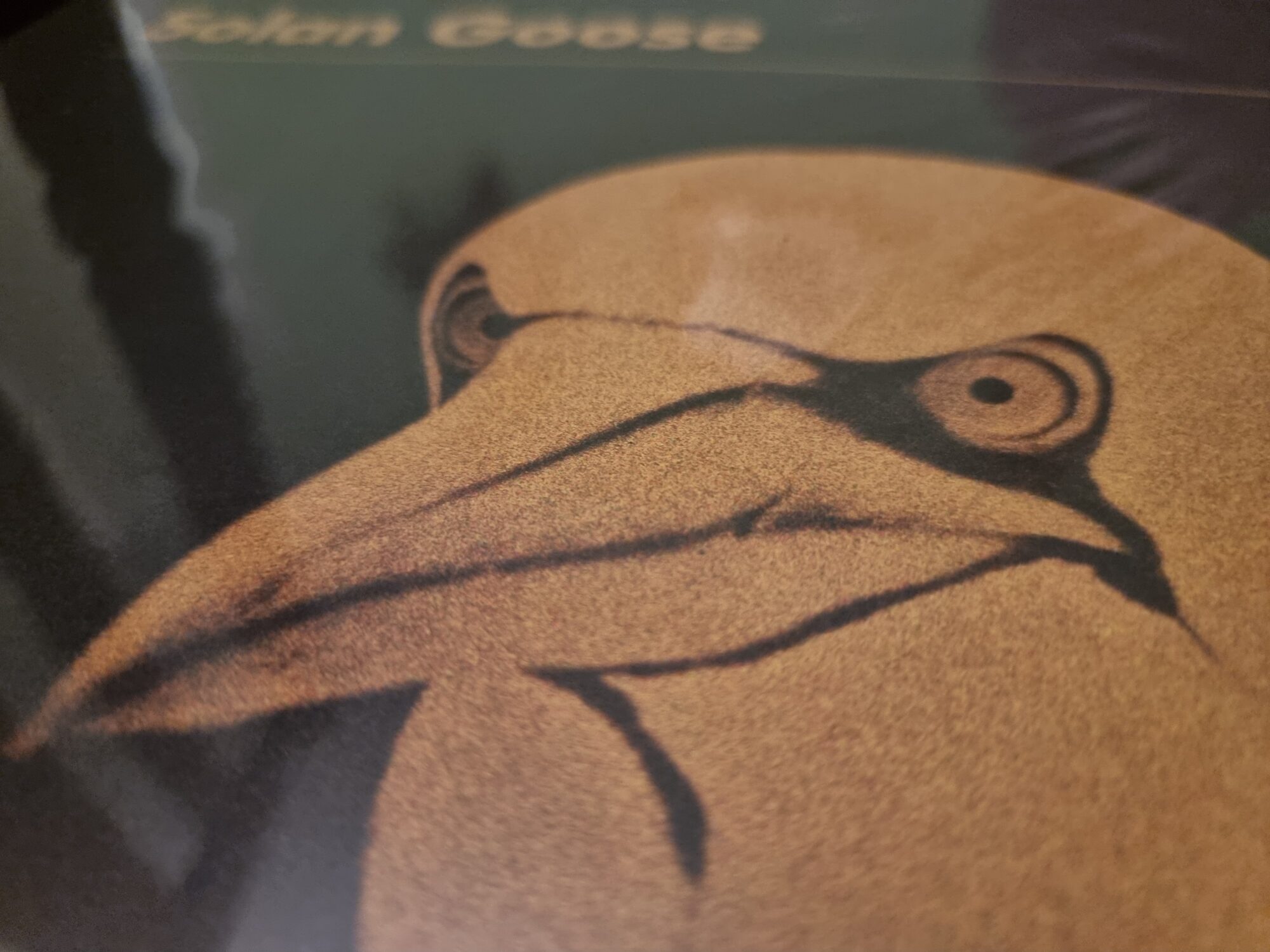
But he’s excelled himself with “Solan Goose”, his solo work dedicated to the bird-life of his native Orkney. He’s excelled himself and vastly exceeded the established limits of whatever-that-genre-might-be-called too. Remarkably, he’s done it without much ceremony: it is not a record which proclaims a new dawn or casts disdainful sneers at its peers, and some of its fascination comes from how an accumulation of relatively small differences can create something so utterly singular. A little extra pause here, a little more emphasis on a melody there; a boldness, an intensity. There is a version of “Solan Goose” which isn’t so exquisitely arranged and played, which isn’t so intent on holding you by the shoulders and turning you to face the horizon…and which is merely quite a pleasant listen, another one of those records, another background to another car advert. Instead, Cooper leads his compositions to the clifftops and sets them free, and the results are just…well, there aren’t really words, and there don’t need to be words.
On more than one occasion, I’ve sat on a train listening to “Solan Goose” and gazing out of the window and found myself close to tears. I’ve never been to Orkney but I’ve found a profound peace on the cliffs of the Lizard in Cornwall, a tiny speck of life amid vast skies and seas, and it lifts me up and carries me there, wherever I am. It is for this purpose that Cooper made the music in the first place and it shows in every expressive note. It’s an unashamedly devotional record, a pure celebration, the listener as an empty vessel to be filled with the glory of the landscape. It doesn’t flirt with its melodies, doesn’t try to be clever with them; it embraces them fully, makes them the heart and soul of the piece. It has moments, such as the point at which “Aak” stops soaring upwards and falls away beneath your feet, which are genuinely and knowingly awe-inspiring.
But Cooper understands that while the landscape itself might be vast, your relationship to it is intimate and personal, that it lives within you through memory and imagination. There is always space within this music for you; it never leaves you behind, always has your hand. “Shalder” grows from a foundation of judicious piano notes, suggestive of dark wooden floorboards and well-worn furniture, and expands in scale while never losing sight of home. “Tammie Norie” feels like a lost folk song, something to pass onwards to another generation, and finds echoes in the use of spoken word recollection elsewhere. The abundant humanity here knows its place in the grand order of things, and finds comfort in that place.
And so maybe what makes this such a precious record, and such a unique one, is its sheer generosity of spirit. A solo album, perhaps, but in the act of listening, it is yours and yours alone. It feels like a gift, an act of faith and kindness. My world is better for it. Yours would be too.
Ian Grant